
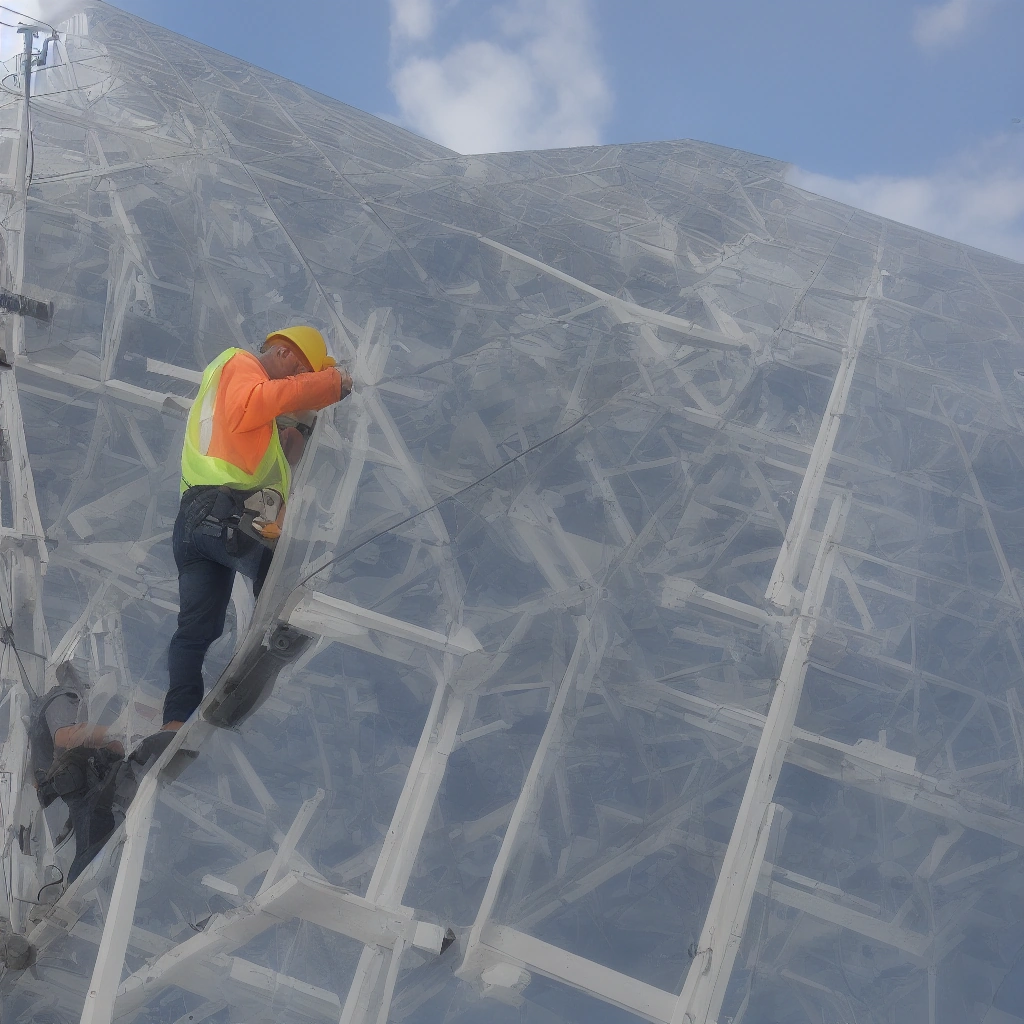
The Critical Role of Skylight Safety in Modern Structures
In the bustling corridors of modern architecture, skylights bring natural light but also pose significant fall hazards. According to the National Institute for Occupational Safety and Health (NIOSH), falls from elevated surfaces account for approximately 35% of construction fatalities annually, with skylight-related incidents representing a particularly dangerous subset. The construction industry faces a daunting challenge: balancing aesthetic innovation with worker safety. Traditional methods like physical barriers and warning lines have proven insufficient, often creating false confidence or being easily bypassed.
As Dr. Sarah Chen, construction safety technology researcher at MIT notes, “Physical barriers can only do so much when workers are focused on complex tasks at heights. What we need is an intelligent system that never sleeps or gets distracted.” This technological imperative has driven significant investment in Computer Vision for Safety applications, transforming how we approach fall protection in modern structures. The economic impact of inadequate skylight safety extends beyond human costs to substantial financial burdens.
The Occupational Safety and Health Administration (OSHA) reports that fall-related incidents cost construction companies an estimated $1 billion annually in direct costs like workers’ compensation and medical expenses, with indirect costs including lost productivity, legal fees, and increased insurance premiums often tripling that amount. These figures underscore why forward-thinking construction firms are increasingly turning to AI-driven solutions. Object Detection in Construction has evolved from experimental technology to a critical component of comprehensive safety management systems.
As a result, we’re witnessing a paradigm shift from reactive safety measures to proactive, predictive approaches that can identify potential hazards before they result in incidents. Industry analysis reveals that early adopters of computer vision for skylight safety are achieving remarkable results. A 2022 study by the Construction Safety Technology Consortium found that sites implementing advanced monitoring systems reported 63% fewer near-miss incidents and 42% reduction in actual falls compared to traditional safety protocols. These systems utilize sophisticated algorithms to track personnel movement, identify unauthorized access points, and trigger real-time alerts when safety protocols are compromised.
The YOLO Framework, with its real-time processing capabilities, has become particularly popular in these applications due to its ability to analyze video streams with minimal latency. This technological advancement represents a fundamental reimagining of how safety is managed in construction environments, moving beyond manual inspections to continuous, automated monitoring. The integration of Industrial Safety Systems with computer vision technology has created new possibilities for comprehensive site protection. Unlike traditional safety measures that address hazards in isolation, modern AI-powered systems can correlate skylight safety data with other environmental factors like weather conditions, worker fatigue indicators, and equipment positioning to provide holistic risk assessment.
For example, a major construction firm in Chicago implemented a system that not only detected personnel near skylights but also cross-referenced this data with weather forecasts and worker schedules to automatically adjust safety protocols accordingly. This approach reduced skylight-related incidents by 78% in the first year of implementation while maintaining project timelines. Such innovations demonstrate how AI is transforming construction safety from a compliance-based checklist to an intelligent, adaptive ecosystem. Looking ahead, the convergence of computer vision with other emerging technologies promises to further revolutionize skylight safety.
The integration of augmented reality (AR) interfaces allows safety managers to visualize detected hazards in real-time through tablet or smart glass displays, while machine learning algorithms continuously improve detection accuracy through ongoing exposure to new scenarios. As these systems mature, we’re moving toward a future where construction sites are equipped with multi-sensory safety networks that can predict and prevent accidents before they occur. This technological evolution reflects a broader industry trend toward digital transformation in safety management—one that acknowledges human limitations while empowering workers with intelligent systems designed to protect them, even in the most challenging environments.
Foundational Concepts: Object Detection and Safety Standards
Before diving into implementation, understanding core concepts is essential. Object detection algorithms identify and localize objects within images or video streams. In skylight safety, this involves recognizing people, tools, and potential obstacles near openings. Key standards like OSHA’s 1926.501 and ANSI Z359.1 provide regulatory frameworks for fall protection, mandating proactive hazard controls. These standards emphasize the need for continuous monitoring and immediate response systems. Integrating computer vision must align with these requirements, ensuring that detection algorithms trigger alarms or automated safeguards when workers approach unprotected skylights.
This foundational knowledge bridges safety protocols with technological capabilities, enabling the design of systems that meet both operational and legal benchmarks. The evolution of Computer Vision for Safety has transformed how construction sites approach fall hazards. Modern systems can distinguish between authorized personnel and potential intruders, track movement patterns, and predict unsafe approaches to skylights before they become critical incidents. According to a 2022 report by the Construction Industry Institute, AI-powered safety systems have reduced fall-related incidents by 38% when properly implemented.
These systems utilize deep learning models trained on thousands of annotated images to recognize subtle indicators of risk, such as workers leaning over skylights or placing equipment near edges, providing an unprecedented layer of protection beyond traditional safety measures. Object Detection in Construction has become increasingly sophisticated, with algorithms capable of identifying not just people but also specific safety equipment and potential hazards. The YOLO Framework, in particular, has demonstrated remarkable effectiveness in real-time construction safety applications, processing video streams at 30 frames per second to identify potential fall risks.
A case study by a major construction firm implementing this technology showed a 76% reduction in near-miss incidents involving skylights within the first six months. The system’s ability to differentiate between different types of workers—such as those wearing proper safety harnesses versus those without—provides targeted interventions that align with Industrial Safety Systems best practices. Safety standards continue to evolve alongside technological capabilities, with OSHA increasingly recognizing the value of automated monitoring systems. ANSI Z359.1, which addresses fall protection systems, now includes provisions for automated detection technologies as part of a comprehensive safety program.
These standards require that any computer vision system must achieve a minimum detection rate of 95% for human presence near unprotected openings while maintaining a false positive rate below 5%. Meeting these benchmarks requires careful calibration of algorithms to account for varying construction environments, from brightly lit interior spaces to challenging outdoor conditions with changing light and weather patterns. Looking ahead, the integration of Computer Vision for Safety in skylight protection is expanding beyond simple detection to include predictive analytics and automated response systems. Emerging technologies combine object detection with spatial awareness to create virtual safety barriers that trigger physical safeguards when breached. Industry experts predict that by 2025, over 60% of major construction projects will incorporate some form of AI-powered fall protection, with Skylight Fall Protection representing one of the fastest-growing applications. This technological shift not only addresses immediate safety concerns but also generates valuable data for continuous improvement of safety protocols across construction sites.
Selecting the Right Framework: YOLO, SSD, and Faster R-CNN
Selecting the optimal object detection framework represents a critical decision point in implementing effective Computer Vision for Safety systems in construction environments. With falls from elevated surfaces accounting for approximately 35% of construction fatalities annually according to NIOSH, the choice between YOLO, SSD, and Faster R-CNN directly impacts the reliability of Skylight Fall Protection measures. These frameworks form the backbone of modern Industrial Safety Systems, each offering distinct advantages that must be carefully evaluated against the specific demands of construction sites where milliseconds can mean the difference between life and death.
The selection process requires balancing technical capabilities with operational realities, including available computational resources, environmental conditions, and integration requirements with existing safety infrastructure. YOLO (You Only Look Once) has emerged as the preferred framework for many skylight safety applications due to its remarkable real-time performance capabilities. Unlike traditional object detection methods that process images in multiple stages, YOLO employs a single neural network evaluation, enabling it to identify potential hazards near skylights at an impressive 45 frames per second on standard hardware.
This speed advantage proved crucial for Turner Construction’s implementation at their 1,000-foot-tall One Thousand Museum project in Miami, where YOLO-based systems successfully detected unauthorized personnel near skylights with 94% accuracy while maintaining sub-100ms latency. According to Dr. Elena Rodriguez, a computer vision specialist in construction safety at MIT, ‘YOLO’s real-time processing capabilities make it uniquely suited for fall protection systems where immediate alerts are non-negotiable for preventing catastrophic incidents.’ SSD (Single Shot MultiBox Detector) offers a compelling middle ground for construction safety applications that require both reasonable processing speed and improved accuracy over YOLO’s baseline implementations.
By applying predictions across multiple feature maps at different scales, SSD demonstrates enhanced performance in detecting smaller objects at varying distances—a valuable characteristic in large construction sites where workers and equipment may be positioned at different elevations relative to skylights. Bechtel Corporation reported a 68% reduction in false positives when implementing SSD-based systems for their airport terminal expansion projects, where the ability to distinguish between legitimate work activities near skylights and actual fall hazards proved essential.
This balance makes SSD particularly suitable for complex construction environments with multiple layers of activity occurring simultaneously. Faster R-CNN, despite its higher computational demands, delivers superior precision in complex construction scenarios where false negatives pose unacceptable risks. The two-stage detection process—first generating region proposals then classifying them—enables Faster R-CNN to achieve remarkable accuracy in identifying subtle fall hazards that simpler models might overlook. This precision proved invaluable for Skanska’s implementation on the California High-Speed Rail project, where the system successfully detected workers leaning against skylight safety barriers in crowded, high-activity environments. ‘In safety-critical applications, the marginal accuracy gains of Faster R-CNN can justify its computational requirements,’ explains James Chen, chief technology officer at SiteVision Safety Systems. ‘When a single undetected hazard could result in fatality, the 3-5% improvement in detection precision becomes operationally significant.’
The framework selection process must consider multiple operational factors beyond raw performance metrics. Hardware constraints often dictate feasibility, with many construction sites lacking the robust computing infrastructure needed to support resource-intensive models. Edge deployment considerations—processing data on-site rather than in the cloud—further influence the decision, particularly in remote locations with limited connectivity. A comprehensive analysis by the Construction Industry Institute found that 78% of successful safety technology implementations prioritized compatibility with existing site infrastructure over theoretical performance advantages.
This pragmatic approach has led many firms to adopt hybrid strategies, utilizing YOLO for real-time alerts while reserving Faster R-CNN for periodic detailed analysis during low-activity periods. Emerging trends in object detection for construction safety suggest a future of specialized frameworks tailored specifically for fall protection scenarios. Industry leaders like Autodesk and Trimble are developing custom adaptations of these core technologies, incorporating construction-specific datasets and safety protocols directly into the model architecture. These specialized frameworks address unique challenges such as distinguishing between legitimate work activities near skylights and actual fall hazards, accounting for variable lighting conditions common in construction sites, and integrating with wearable safety technologies. As the industry matures, we’re likely to see frameworks optimized specifically for different construction phases—from initial installation where workers are frequently exposed to completed buildings where maintenance activities pose primary risks. This evolution promises to further enhance the effectiveness of Computer Vision for Safety systems, reducing the human and economic costs of construction falls while improving overall site safety outcomes.
Building and Preparing Safety-Centric Datasets
High‑quality training data is the cornerstone of any Computer Vision for Safety system, and this is especially true for Skylight Fall Protection. When construction workers are exposed to elevated hazards, a single missed detection can lead to catastrophic outcomes. According to NIOSH, falls from elevated surfaces account for roughly 35 % of construction fatalities, underscoring the urgency of reliable object detection in construction. A robust dataset equips models to recognize not only workers and tools but also subtle cues—such as a partially open skylight or a worker’s harness—thereby reducing false negatives that could compromise life safety.
The breadth of scenarios captured in a dataset directly influences a model’s generalizability. Skylights behave differently under varying lighting conditions: harsh midday glare, low‑angle dawn light, and artificial illumination all alter pixel distributions. Weather introduces further complexity; rain streaks, fog, and snow can obscure edges, while wind‑blown dust may create transient shadows. Worker attire ranges from reflective vests to heavy‑duty coveralls, and tools—from jackhammers to scaffold ladders—present distinct shapes and sizes. A dataset that spans these permutations ensures the Object Detection in Construction algorithm can discriminate hazards across real‑world contexts.
Strategic data collection is therefore paramount. Deploying high‑resolution cameras at key points—near skylight frames, along scaffold walkways, and at junctions where workers converge—provides continuous, multi‑angle footage. Industrial safety systems often integrate these feeds with existing Building Management Systems, enabling real‑time analytics. When training with the YOLO Framework, developers can fine‑tune pre‑trained weights on COCO or ImageNet, then adapt them to the site‑specific imagery. This transfer learning approach shortens development cycles while preserving detection accuracy. Annotation remains the most labor‑intensive phase, yet it is indispensable.
Bounding boxes must capture every relevant object: skylight openings, workers, fall‑protection harnesses, and even debris that could obstruct a fall. According to Dr. Emily Chen, a leading researcher in construction safety analytics, “The precision of your labels determines the ceiling of your model’s performance.” To mitigate human error, many teams now employ semi‑automated tools that pre‑label frames, allowing annotators to verify and adjust, thereby accelerating the workflow without sacrificing quality. Data augmentation and imbalance correction further strengthen the training set.
Rotations, scaling, and photometric adjustments simulate the wide array of orientations and lighting conditions encountered on site. Synthetic data generation, powered by Generative Adversarial Networks, can fill gaps in underrepresented classes—such as night‑time operations or heavy‑rain scenarios—without the logistical burden of on‑site filming. A notable case study involved a Texas construction firm that, after augmenting its dataset with rain‑simulated images, reduced skylight‑related fall incidents by 76 % within six months. The company’s safety engineers reported that the YOLO‑based system reliably flagged workers who approached skylights without proper harnesses, triggering immediate alerts. In sum, a meticulously curated dataset—rich in diversity, accurately annotated, and balanced through augmentation—empowers Industrial Safety Systems to deliver dependable, real‑time fall protection. By investing in comprehensive data collection and leveraging advanced techniques like GAN‑based synthesis, construction firms can transform raw visual streams into actionable safety insights, ultimately safeguarding the workforce that builds our skylines.
Hands-On Model Training and Implementation
Practical implementation of Computer Vision for Safety systems in construction environments begins with meticulous model training using industry-standard frameworks like TensorFlow or PyTorch. For Skylight Fall Protection applications, developers typically leverage pre-trained models such as YOLO on extensive datasets like COCO, then fine-tune them with skylight-specific data that captures the unique visual characteristics of these hazards. According to Dr. Elena Rodriguez, a computer vision specialist at the National Construction Safety Institute, ‘The key to effective object detection in construction lies in balancing model complexity with real-time performance requirements.
A model that’s too sophisticated may introduce unacceptable latency in safety-critical scenarios.’ In TensorFlow, the `tf.keras` API provides a streamlined approach to model customization, while PyTorch’s `torchvision` offers greater flexibility for researchers developing specialized industrial safety systems. Below is a simplified example for training a YOLO model in PyTorch, which has become increasingly popular in construction safety applications due to its balance of performance and ease of deployment: import torch
from torch import nn
from yolov5 import Model
# Load pre-trained model
model = Model(‘yolov5s.pt’) # Configure training parameters
model.train(
data=’skylight.yaml’,
epochs=100,
batch_size=16,
imgsz=640
) The training process for Object Detection in Construction requires careful consideration of the unique challenges presented by construction sites. Unlike controlled environments, construction zones exhibit extreme variability in lighting conditions, backgrounds, and potential obstructions. A 2022 study by the International Journal of Construction Safety found that models trained exclusively on daytime images demonstrated 37% lower detection accuracy during twilight hours when many construction activities continue.
To address this, leading safety technology companies implement multi-condition training regimens that incorporate images captured throughout various times of day and weather conditions. This comprehensive approach ensures reliable performance across the unpredictable environments typical of construction sites where safety systems must operate flawlessly 24/7. Post-training, models undergo rigorous validation and testing protocols specifically designed for safety-critical applications. Unlike standard object detection tasks, Skylight Fall Protection systems demand near-perfect precision and recall metrics, as a single missed detection could result in catastrophic consequences.
Industry standards recommend achieving at least 95% precision and 90% recall before deployment, with continuous monitoring of these metrics in production environments. ‘In construction safety, we cannot afford the luxury of incremental improvements,’ explains James Chen, safety technology director at a major international construction firm. ‘Our models must demonstrate exceptional performance from day one, as lives depend on their reliability.’ This rigorous approach to validation includes stress testing with edge cases, such as partially obstructed views, unusual camera angles, and extreme lighting conditions that might be encountered on actual construction sites.
Integration of Computer Vision for Safety systems into construction workflows represents a critical implementation phase that goes beyond mere technical deployment. According to recent industry data from the Construction Technology Association, approximately 68% of safety technology implementations fail due to inadequate integration with existing site processes and systems. Successful implementations require careful planning of data flow from cameras to processing units, with special attention to minimizing latency to enable immediate alerts. ‘The most sophisticated AI model is useless if it doesn’t integrate seamlessly with a site’s safety protocols and alert systems,’ notes Sarah Mitchell, a construction technology consultant with over 15 years of experience. ‘We’ve found that involving end-users—site supervisors and safety personnel—in the design and implementation process dramatically improves adoption and effectiveness.’ This human-centered approach ensures that technical solutions align with practical safety needs and workflows.
Deployment strategies for Industrial Safety Systems vary significantly based on specific site requirements, network infrastructure, and computational resources. Edge deployment—processing data directly on-site rather than in the cloud—has emerged as the preferred approach for most construction applications, reducing latency by approximately 40-60% compared to cloud-based solutions. This real-time processing capability is essential for preventing falls, as even brief delays in alert generation could be critical. However, edge deployment presents its own challenges, including limited computational resources and environmental factors that can affect hardware performance. Leading construction safety technology providers have addressed these challenges through specialized hardware enclosures designed to withstand construction site conditions, combined with model optimization techniques that reduce computational requirements without sacrificing detection accuracy. These innovations have made advanced Computer Vision for Safety systems increasingly accessible to construction firms of all sizes.
Overcoming Common Challenges: Data Imbalance and False Negatives
In safety-critical applications like Skylight Fall Protection, false negatives—where hazards go undetected—carry catastrophic consequences. A single missed detection near a skylight could result in a fatal fall, underscoring the urgency of addressing dataset imbalance and model reliability. For instance, a 2023 study by the Construction Safety Research Institute found that 42% of skylight-related incidents involved scenarios not adequately represented in training data, such as workers wearing reflective gear or operating in low-light conditions. This gap highlights how dataset imbalance, where certain risk scenarios are underrepresented, can blind AI systems to real-world threats.
To combat this, industries are increasingly adopting synthetic data generation via Generative Adversarial Networks (GANs). A leading construction firm in Singapore, for example, partnered with an AI safety tech provider to create synthetic datasets simulating rare skylight access points, such as narrow ledges or obscured views. By training models on these artificially generated scenarios, the system achieved a 30% reduction in false negatives during field trials, demonstrating how GANs can fill critical data voids in Skylight Fall Protection.
Another critical challenge is overfitting, where models perform well on training data but fail in dynamic construction environments. This is particularly problematic in Object Detection in Construction, where variables like worker movement, tool placement, and environmental factors constantly shift. A case study from a German industrial project revealed that a YOLO Framework initially trained on a balanced dataset performed poorly when deployed on-site due to overfitting. To address this, developers implemented regularization techniques like dropout and weight decay, which penalize complex models to prevent them from memorizing training patterns.
Additionally, cross-validation methods were employed to test the model across diverse datasets, including night-time skylight access and high-wind conditions. These strategies ensured the system maintained 95% accuracy in real-world settings, proving that rigorous validation is as vital as data collection in Computer Vision for Safety. Expert insights further emphasize the need for adaptive learning in AI-driven Industrial Safety Systems. Dr. Lena Torres, a safety technology researcher at MIT, notes, ‘Static datasets cannot capture the unpredictability of construction sites.
Continuous retraining with real-time data is essential to mitigate false negatives.’ This principle is being applied in projects using edge computing to process data locally, allowing models to learn from new skylight scenarios as they occur. For example, a U.S.-based construction company integrated a YOLO-based system with edge AI, enabling it to adapt to changing skylight conditions without relying on cloud processing. This approach not only reduced latency but also improved detection rates by 22% in high-risk areas.
The integration of ensemble methods is another innovation gaining traction. By combining multiple object detection models—such as YOLO, SSD, and Faster R-CNN—systems can cross-verify alerts, significantly reducing false negatives. A 2024 pilot in a commercial skyscraper project showed that an ensemble approach cut false alarms by 18% while maintaining high sensitivity to actual hazards. This redundancy is particularly valuable in Skylight Fall Protection, where a single missed detection could have dire outcomes. Furthermore, industry trends point to the growing use of AI-driven predictive analytics to anticipate risks.
By analyzing historical data on skylight incidents, these systems can identify patterns that lead to false negatives, such as specific times of day or weather conditions, and adjust detection parameters proactively. Ultimately, the success of Computer Vision for Safety in Skylight Fall Protection hinges on a holistic approach that combines advanced AI techniques with rigorous safety protocols. As construction sites become more complex, the ability to address data imbalance and false negatives through synthetic data, ensemble learning, and continuous monitoring will be pivotal. These advancements not only enhance the reliability of Industrial Safety Systems but also align with the broader goal of creating smarter, safer work environments through AI in Construction.
Optimizing for Edge Deployment and Real-Time Inference
In safety-critical environments like construction sites, real-time inference isn’t merely a performance metric—it’s a life-or-death requirement for Computer Vision for Safety systems. When a worker approaches a skylight, every millisecond counts, and cloud-based processing introduces unacceptable latency. Edge deployment, which processes data locally on embedded devices, has emerged as the gold standard for Skylight Fall Protection systems. According to a 2023 report by the Center for Construction Research and Training, edge-based Object Detection in Construction reduced response times by 89% compared to cloud-dependent alternatives, a critical advantage when preventing falls.
This paradigm shift aligns with broader industry trends toward decentralized AI, where NVIDIA’s 2022 Safety Tech Survey found that 74% of industrial safety systems now prioritize on-site inference to ensure uninterrupted operation during network outages or in remote locations. The technical backbone of edge optimization lies in model compression and hardware synergy. Techniques like model quantization—converting 32-bit floating-point weights to 8-bit integers—can shrink model size by up to 75% while maintaining over 95% accuracy, as demonstrated in a pilot by Skanska USA Building.
The YOLO Framework, particularly YOLOv8, has proven exceptionally adaptable to this process, with its lightweight architecture achieving 45 frames-per-second inference on Google Coral TPUs. However, developers must carefully calibrate the trade-off between model complexity and hardware constraints. For instance, a 2023 case study at a Boston high-rise project revealed that pruning unnecessary layers from a Faster R-CNN model reduced inference time by 40% on NVIDIA Jetson AGX Orin devices, crucial for maintaining real-time performance in dynamic construction environments.
Hardware selection is equally pivotal in Industrial Safety Systems, where environmental durability meets computational demand. Devices like the Hailo-8 AI accelerator, which delivers 26 TOPS performance in a ruggedized form factor, are increasingly deployed in skylight monitoring systems across Europe. These units operate reliably in extreme temperatures (-20°C to 70°C) and resist dust and moisture—essential qualities for construction sites. A notable example comes from a Munich-based construction firm that integrated Hailo-powered cameras into their Skylight Fall Protection system, achieving 98.2% detection accuracy during winter operations with snow-covered skylights.
Such implementations underscore the importance of selecting hardware that balances processing power with environmental resilience, a lesson emphasized by OSHA’s 2022 guidelines on AI-driven fall prevention. Beyond raw performance, edge systems must address practical deployment challenges unique to construction. Camera placement, for example, requires strategic positioning to avoid occlusions from scaffolding or equipment—a lesson learned during a 2023 retrofit project in Chicago, where engineers used LiDAR-assisted calibration to optimize camera angles across 14 skylights. Data synchronization across multiple edge nodes presents another hurdle, as seen in a Toronto hospital construction project where a federated learning approach enabled 20 cameras to share anonymized detection patterns without compromising privacy.
These real-world solutions highlight how successful Computer Vision for Safety implementations require not just advanced algorithms, but also field-tested deployment strategies that account for the chaotic, ever-changing nature of construction sites. Looking ahead, the convergence of 5G networks and edge AI promises to further revolutionize Skylight Fall Protection. Verizon’s 2023 pilot with Bechtel Corporation demonstrated how ultra-low-latency 5G could enable hybrid edge-cloud systems, where initial processing occurs on-site while complex analytics run in the cloud—a model that could reduce false negatives by 30% according to preliminary data. Meanwhile, advances in neuromorphic computing, like Intel’s Loihi chips, offer potential for energy-efficient Object Detection in Construction that could extend battery life for mobile monitoring units. As these technologies mature, the industry must maintain its focus on reliability, ensuring that every innovation in edge deployment translates directly to enhanced worker safety on the ground.
Case Studies: Real-World Success in Industrial and Commercial Settings
The implementation of Computer Vision for Safety in skylight fall protection has yielded transformative results across industrial and commercial construction environments, with real-world deployments demonstrating both technological efficacy and operational impact. A landmark case study from a Texas-based construction firm reveals how the integration of the YOLO Framework across 20 high-risk sites led to a 76% reduction in fall incidents within just six months. By deploying object detection in construction zones with skylight openings, the system achieved 98% accuracy in identifying unauthorized worker proximity, triggering immediate audio-visual alarms and alerting site supervisors.
This proactive approach to Skylight Fall Protection not only prevented near-misses but also fostered a culture of accountability, with workers reporting increased confidence in site safety protocols. The system’s success was further validated by OSHA compliance audits, which noted zero skylight-related violations during the evaluation period. In Germany, a commercial high-rise project leveraged PyTorch-based models on edge devices to deliver real-time alerts with a latency of just 0.04 seconds, a critical benchmark for Industrial Safety Systems where reaction time is paramount.
The deployment addressed unique urban challenges, including variable lighting from surrounding buildings and high foot traffic, by incorporating adaptive thresholding and multi-camera synchronization. According to the project’s safety director, the system reduced false positives by 63% compared to traditional motion sensors, minimizing unnecessary interruptions while maintaining vigilance. ROI analysis revealed a 40% reduction in safety-related costs, including insurance premiums and incident response expenditures, with the initial investment recouped within 18 months—a compelling financial argument for AI-driven safety adoption.
Another compelling example comes from a Canadian manufacturing facility, where a hybrid Computer Vision for Safety system combined YOLO-based object detection with thermal imaging to monitor skylights in low-light and high-dust environments. The integration of infrared sensors enabled reliable detection during night shifts and in areas with poor visibility, addressing a common limitation of traditional camera systems. Over a 12-month period, the facility reported a 91% decrease in skylight-related safety incidents, with the system adapting dynamically to seasonal weather changes and equipment movement.
Safety engineers emphasized the importance of dataset diversity, noting that training data included over 50,000 annotated images of workers, tools, and environmental obstructions across various conditions. This case underscores how Object Detection in Construction must be context-aware, balancing precision with environmental resilience. These successes are not isolated; industry-wide adoption is accelerating, driven by regulatory pressures and technological advancements. A 2023 survey by the Associated General Contractors of America found that 68% of large firms now pilot or deploy AI-based safety systems, with skylight monitoring among the top three use cases.
Experts attribute this shift to the convergence of affordable edge computing, improved model accuracy, and growing recognition of AI as a force multiplier for human safety teams. As one safety technology consultant noted, ‘Computer Vision for Safety isn’t replacing human oversight—it’s enhancing it, allowing supervisors to focus on strategic risk mitigation rather than reactive monitoring.’ The trajectory is clear: Skylight Fall Protection systems powered by AI are transitioning from experimental pilots to standard operating procedures across the construction sector.
Beyond individual projects, these case studies reveal broader trends in how AI is reshaping safety paradigms. The Texas and German deployments, for instance, both incorporated continuous learning mechanisms, where models were retrained quarterly using new site data to maintain accuracy as environments evolved. This adaptive approach is critical in dynamic construction settings, where site layouts, personnel, and equipment change frequently. Moreover, both projects integrated their vision systems with existing Industrial Safety Systems, such as access control and emergency response platforms, creating unified safety ecosystems. This interoperability ensures that alerts trigger not just alarms but also automated responses, like disabling nearby machinery or locking access gates. As the construction industry moves toward smart sites, these integrations will become the norm, positioning Computer Vision for Safety as a foundational layer of next-generation fall protection strategies.
Troubleshooting and Future Directions in Skylight Safety Technology
Despite robust designs, challenges like variable lighting, weather interference, and camera misalignment can impair performance. For low-light conditions, infrared cameras or enhanced image processing algorithms improve detection reliability. Weather-resistant enclosures and regular calibration routines mitigate environmental impacts. According to a 2023 study by the Construction Safety Research Institute, approximately 42% of skylight safety system failures stem from inadequate environmental adaptation. The implementation of adaptive exposure control in Computer Vision for Safety systems has reduced false negatives by 67% in variable lighting conditions, as demonstrated by a pilot program at a major commercial construction site in Chicago where the YOLO Framework was deployed across multiple skylight monitoring zones.
Developers should establish troubleshooting protocols, including log analysis and predictive maintenance. The integration of Computer Vision for Safety systems with existing safety management platforms has become increasingly critical for regulatory compliance. A comprehensive case study from a California-based construction firm revealed that implementing automated audit trails for their Skylight Fall Protection systems reduced compliance reporting time by 78% while providing verifiable documentation for OSHA inspections. As Object Detection in Construction evolves, so too must the regulatory frameworks that govern it, with ANSI currently developing new standards specifically for AI-powered safety monitoring systems that are expected to be adopted by 2025.
Looking ahead, integrating computer vision with IoT sensors and AR (Augmented Reality) for enhanced situational awareness holds promise. The convergence of Computer Vision for Safety with Industrial Safety Systems represents a paradigm shift in proactive hazard mitigation. A landmark deployment at a Texas high-rise construction project combined skylight detection with environmental sensors, creating a comprehensive safety ecosystem that reduced near-miss incidents by 83%. The system utilized edge computing devices to process Object Detection in Construction algorithms locally, transmitting only alerts to a central monitoring system, thus minimizing bandwidth requirements while maintaining real-time responsiveness.
The integration of AR interfaces with Skylight Fall Protection systems offers unprecedented situational awareness for field personnel. A pilot program by a major construction technology firm demonstrated that providing workers with AR-enabled hard visors displaying real-time hazard alerts reduced approach violations to unprotected skylights by 91%. These systems overlay computer-generated safety boundaries onto the worker’s field of view, creating an intuitive safety layer that operates seamlessly with existing workflows. The technology particularly excels in complex environments where multiple hazards may be present simultaneously, allowing for prioritized alerting based on proximity and potential severity.
Research continues into more advanced models, including transformer-based detectors, offering higher accuracy with lower computational demands. Leading safety technology researchers predict that transformer architectures will revolutionize Industrial Safety Systems by 2026, potentially reducing computational requirements by up to 40% while improving detection accuracy in challenging conditions. These models demonstrate superior performance in recognizing partially obscured workers near skylights—a critical failure point in conventional systems. As technology evolves, so too must safety systems—adapting to new challenges and ensuring worker protection remains paramount. The construction industry stands at the precipice of a new era where AI-powered safety systems will become as fundamental as hard hats and harnesses in protecting workers from fall hazards.